
The look of a French television presenter is not just a personal choice made in the morning in front of a closet. Behind each on-air appearance, a series of decisions involves stylists, partner brands, and technical constraints related to the set. The question deserves to be asked from a specific angle: what mechanisms truly determine what presenters wear, and how do these mechanisms evolve with the arrival of new digital tools?
Brand loans or personal purchases: two models coexisting in French television
Not all presenters operate under the same clothing supply scheme. The table below summarizes the two dominant models observed in the French audiovisual landscape, comparing them with the common practice in the United States.
| Criterion | French model (ethical purchase/rental) | French model (brand loan) | American model (free luxury loan) |
|---|---|---|---|
| Origin of outfits | Personal purchase or rental from responsible platforms | Loan from brands in exchange for visibility | Free loans from luxury houses |
| Risk of conflict of interest | Low | Moderate | High |
| Trend since 2024 | Rapidly increasing | Stable | Dominant but criticized |
| Role of the stylist | Selection from a limited wardrobe | Coordination with press agents | Direct negotiation with the houses |
According to a comparative study by WWD France published in May 2026, French presenters increasingly favor ethical purchases or rentals to avoid conflicts of interest, unlike their American counterparts who regularly incorporate free luxury loans. This distinction reflects a growing sensitivity to transparency issues in French media.
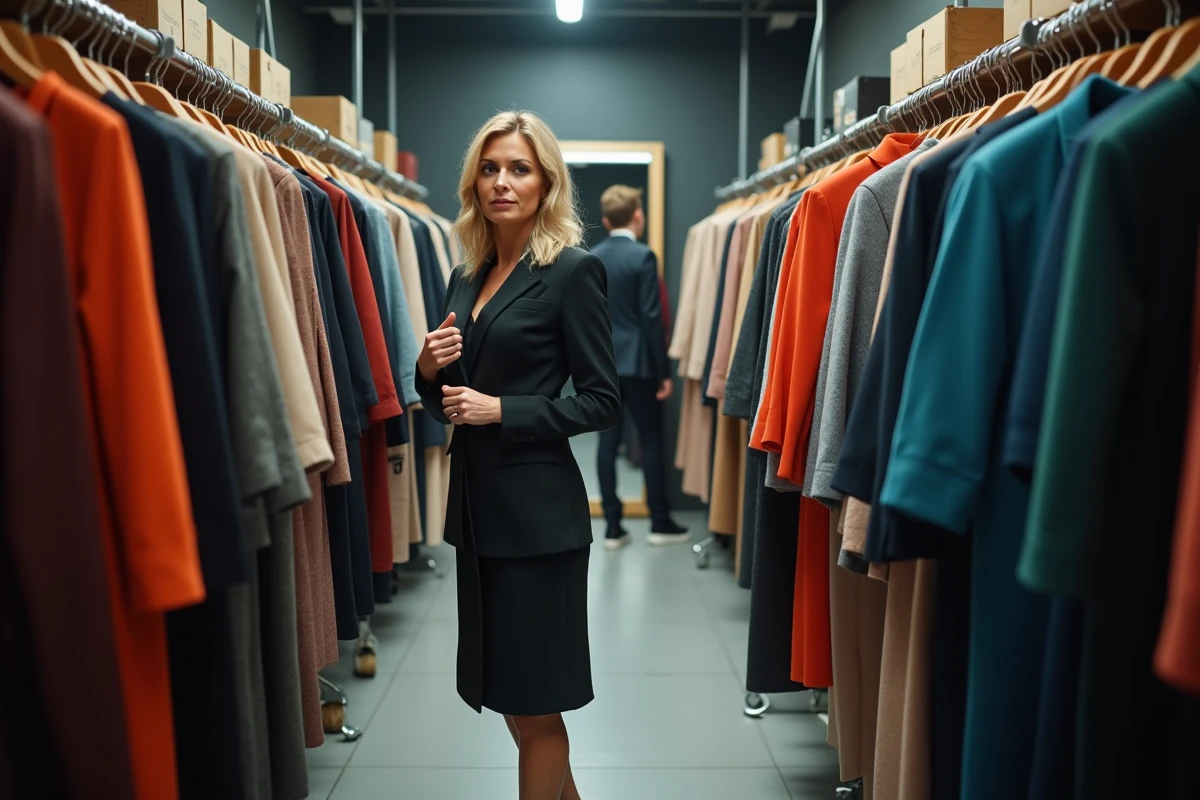
To understand more about who dresses television presenters, one must observe the pivotal role of the channel’s stylists, who manage both the chromatic constraints of the set and the commitments of the brands.
Technical constraints of the set and dress codes of the news
An outfit that works in a store does not necessarily work on screen. The stylists who work for news broadcasts deal with constraints that the viewer does not perceive.
- Fine stripes and tight geometric patterns cause a moiré effect on screen, a disturbing visual flicker related to the interaction between the fabric and the camera resolution. Stylists systematically avoid them.
- Pure white and deep black pose exposure problems: white saturates the sensors, while black absorbs light and erases details. Presenters often wear off-whites or very dark navies.
- Bulky jewelry or dangling earrings create unwanted reflections under set lighting and can catch on lapel microphones. The choice leans towards discreet and matte accessories.
- The cut of the garment must take into account prolonged sitting: a blazer that is too fitted rides up at the shoulders, and a dress that is too short poses a framing issue in close-up shots.
The set stylist arbitrates between aesthetics and technical feasibility before any consideration of trend. This reality explains why the outfits of news presenters often appear more subdued compared to those of entertainment hosts, who have much broader latitude.
The gap between news and entertainment
In contrast, on entertainment or talk show sets, the codes loosen. Hosts can wear bright colors, bolder cuts, and visible accessories. The report “Sustainable Fashion in Audiovisual Media” published by INA in March 2026 highlights that entertainment shows incorporate more pieces from eco-responsible fashion, a phenomenon still marginal in news broadcasts where sobriety remains the norm.
AI algorithms and the standardization of TV presenters’ looks
A recent phenomenon is changing how clothing choices are made behind the scenes. Several channels and styling agencies now use audience analysis tools powered by artificial intelligence to assess the reception of outfits worn on air.
The principle is simple: reactions on social media, engagement rates on video clips, and qualitative feedback from panels are aggregated by algorithms that identify the styles best received by the public. The result guides clothing recommendations for subsequent shows.
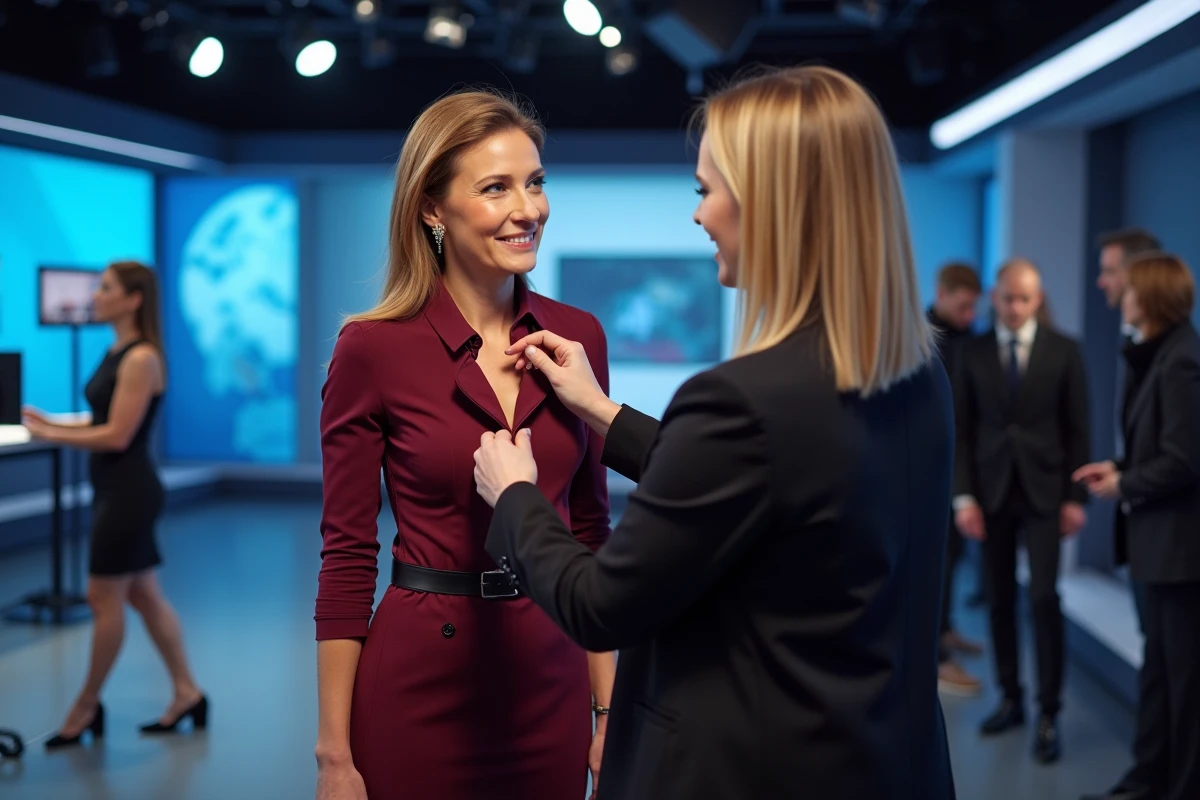
This reliance on audience data creates a measurable risk of standardization. If the algorithm identifies that a navy blazer consistently generates more engagement than a colorful jacket, the recommendation will push towards the navy blazer, regardless of the presenter’s personality. Unlike a human stylist who adapts choices to the character and personal style of each host, the digital tool optimizes for the average.
Personal uniqueness versus audience data
According to a collective interview published in Stratégies Magazine in April 2026, several stylists in the audiovisual field express their concern about this trend. AI suggests what appeals to the majority, not what distinguishes a presenter. The risk is to see a visual uniformity emerge among channels, with each presenter ending up wearing interchangeable outfits dictated by the same metrics.
The recommendation n°2026-001 from the CSA, dated January 2026, indirectly addresses this issue by reminding the importance of preserving diversity in on-screen representations. Without explicitly mentioning clothing algorithms, this document sets a framework that could, in the long term, regulate the use of these tools in visual editorial choices.
Sustainable fashion and presenters: a change in practices on television
The INA report from March 2026 documents a shift towards more responsible practices in dressing presenters. The rental of clothing and the use of eco-responsible brands have been increasing since 2024, driven by dual pressure: that of viewers attentive to the coherence between the ecological discourse of the channels and their practices, and that of the presenters themselves.
This movement remains uneven. Major national channels have styling budgets that allow them to source ethical pieces without aesthetic compromise. Continuous news channels, with more frequent presenter rotations and tighter budgets, struggle to keep pace.
The look of a French television presenter results from a balance between technical constraints of the set, brand strategy of the channels, pressures from the sustainable fashion market, and now, algorithmic recommendations. The tension between data optimization and the preservation of individual visual identity constitutes the next arbitration that stylists and channel management will have to face.