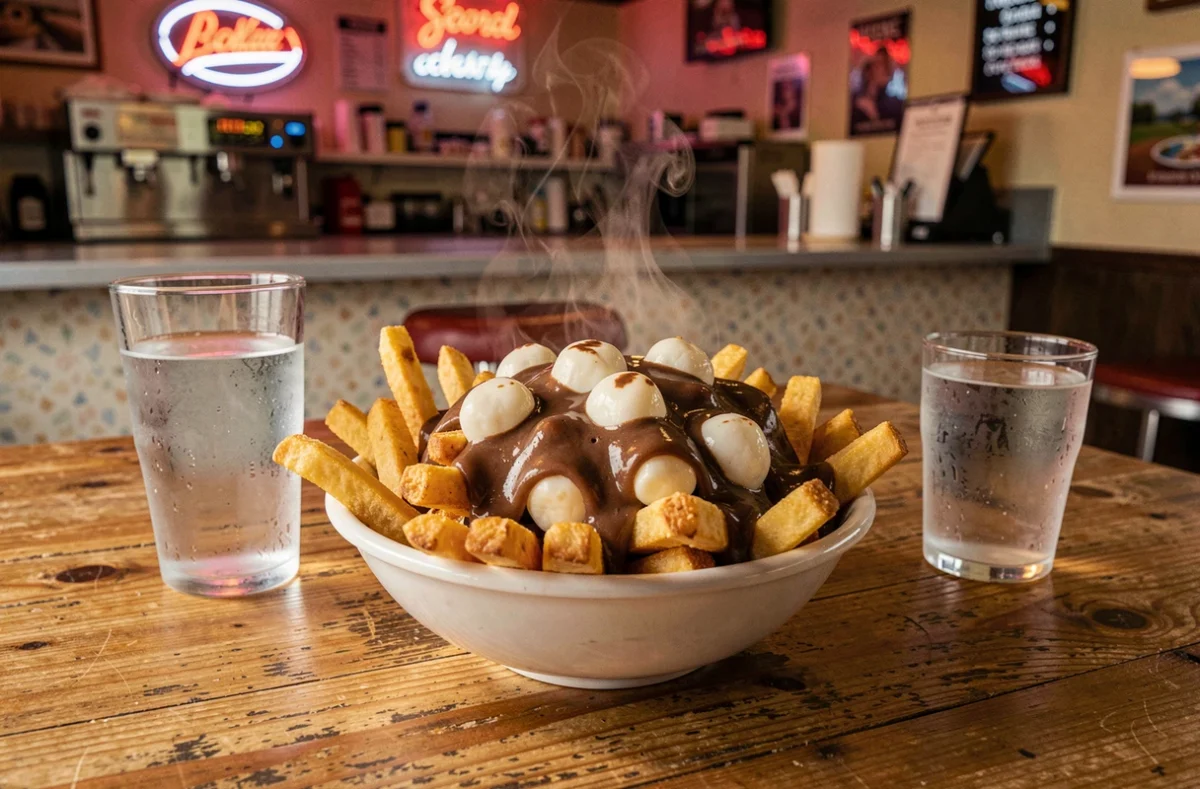
You arrive in Montreal one November evening, order poutine at a Plateau diner, and think Canadian cuisine boils down to that. The next day, you come across brisket with Saskatoon berries served on bannock at an Indigenous restaurant, and everything changes. Canada’s traditional dishes tell stories of local ingredients, migration and culinary know-how that go far beyond the trio of fries, gravy and cheese.
Indigenous cuisine in Canada: living foodways, not relics
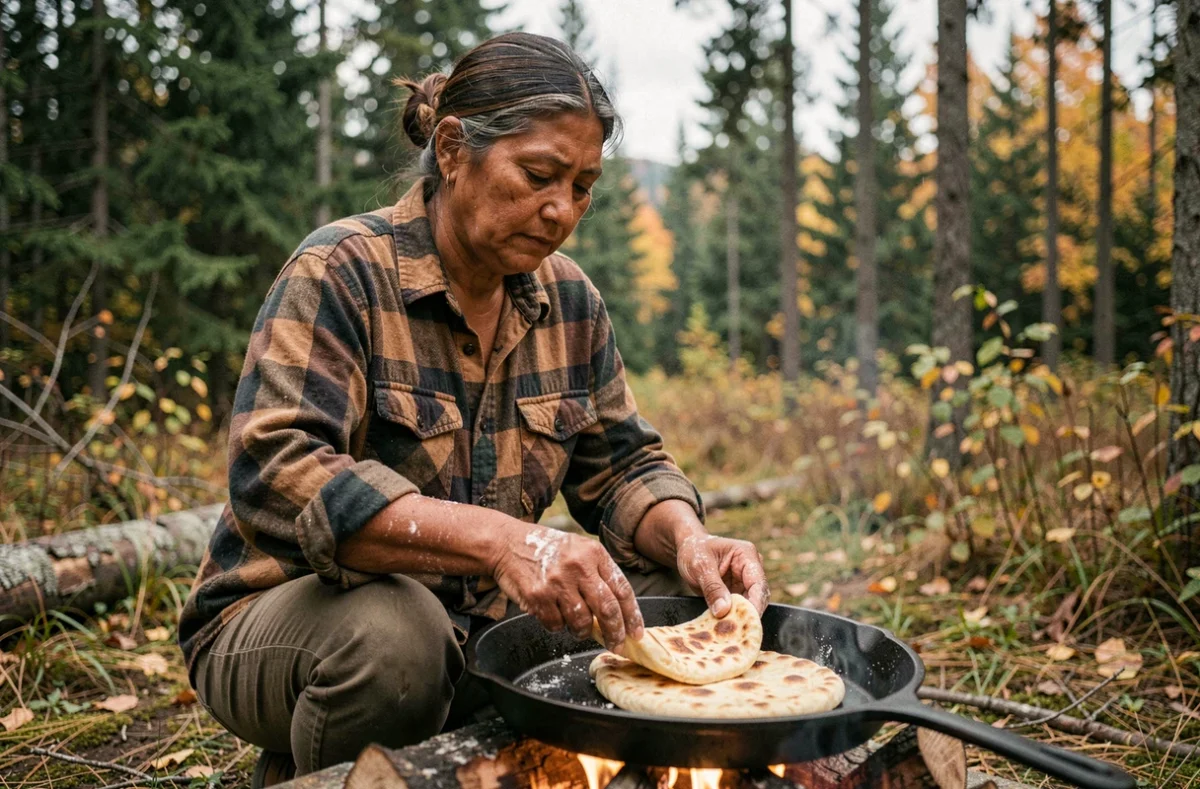
Most Canadian food guides mention bannock as a historical curiosity. That misses what’s happening in contemporary Indigenous restaurants.
In Edmonton, Bernadette’s serves a menu rooted in Cree culture. Its brisket comes with Saskatoon berries and is served on bannock, a flatbread cooked in a pan or oven, with variations that differ from one Nation to another. This style of cooking doesn’t seek to turn heritage into a museum exhibit: it reimagines ancestral ingredients in contemporary dishes.
In Vancouver, Salmon n’ Bannock uses Indigenous cooking methods in contemporary dishes. One example is a pemmican mousse made with smoked dried bison, cream cheese and blueberries. The restaurant opened a location at Vancouver Airport in 2023 (Salmon n’ Bannock On the Fly), a sign that this cuisine is gaining visibility beyond specialist circles.
Exploring Canada’s traditional dishes without sampling Indigenous cuisine means overlooking one of the country’s most distinctive culinary movements.
Poutine and smoked meat: what sets a great dish apart from a tourist trap
Poutine is everywhere, from fast-food joints to fine-dining restaurants. The problem is that quality varies considerably from one place to another.
Poutine: cheese curds make all the difference
Cheese curds should “squeak” when you bite into them. This is the freshness test Quebecers swear by. Soft, silent curds are a sign they’ve been sitting around too long. The brown gravy, ideally homemade, should be poured hot over the fries so the cheese melts slightly without turning runny.
In Montreal, La Banquise (near Parc Lafontaine) remains a go-to, with around 30 variations and round-the-clock service. But you can also find excellent poutine at lesser-known diners in rural Quebec, where the cheese sometimes comes straight from the dairy that same day.
Montreal smoked meat: a culinary tradition shaped by immigration
Montreal smoked meat traces its roots directly to the Ashkenazi Jewish communities that settled in the Mile End neighborhood. The beef is marinated, smoked, then steamed for several hours. Hand-cutting the meat into thick slices radically changes its texture.
This dish illustrates something that lists of specialties often overlook: a significant part of Canadian cuisine grew out of the contributions of immigrant communities. Ginger beef, created at a Chinese Canadian restaurant in Calgary in the 1970s, is another example; it has since become a dish associated with the Prairies.
Quebec’s sweet specialties: beyond maple syrup
Maple syrup runs through Quebec baking, but reducing Canadian sweets to this one ingredient would be a mistake.
- Pouding chômeur is a soft cake topped with hot maple syrup. Born during the Great Depression, it remains a ubiquitous family dessert in Quebec, often served warm with cream.
- Sugar pie uses brown sugar or maple syrup in a dense, gooey filling. It’s served at holiday meals and at sugar shacks in spring.
- Nanaimo bars, originally from British Columbia, layer a chocolate-coconut biscuit base, vanilla custard and chocolate icing. The filling requires no baking, making this an easy but addictive dessert.
- Maple taffy on snow is made by pouring boiling syrup onto clean snow, then rolling it onto a stick. It’s a seasonal treat enjoyed at sugar shacks between March and April.
Tourtière, cipaille and pâté chinois: Canadian comfort food
These three dishes have one thing in common: they were created to feed entire families using affordable ingredients and long cooking times.
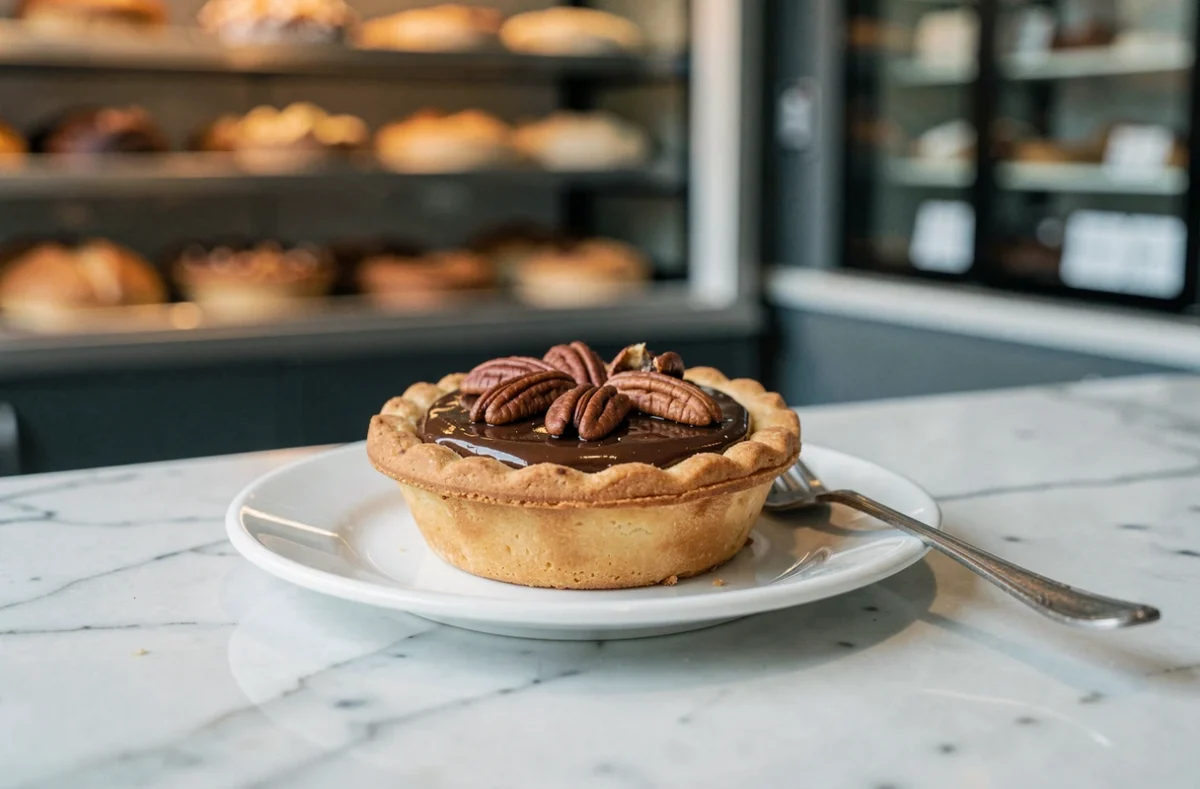
Tourtière is a meat pie (pork, veal and sometimes game) seasoned with cloves and cinnamon. Recipes vary by region: the Lac-Saint-Jean version, sometimes called cipaille, layers several kinds of meat and pastry in a deep dish that cooks for hours. Every Quebec family has its own tourtière recipe, and debates over the “real” version are a Christmas dinner classic.
Despite its name, pâté chinois is distinctly Quebecois. It’s made by layering ground meat, corn kernels (known as “blé d’Inde”) and mashed potatoes, in that strict order. Quebecers sum up the recipe in three words: steak, blé d’Inde, patates.
Canadian seafood: Maritime lobster and Pacific salmon
The Atlantic coast and Pacific shoreline offer two distinct seafood traditions.
In the Maritime provinces (New Brunswick, Nova Scotia and Prince Edward Island), lobster is served in a lobster roll: a small brioche bun filled with lobster meat, mayonnaise and lemon. Fishing season determines when it’s available, and a lobster roll eaten locally in summer is nothing like a frozen version.
Cooking salmon on a cedar plank is a technique inherited from the Indigenous Peoples of the Pacific Northwest. The cedar infuses the fish with a subtle smoky aroma as it cooks. You’ll find this method in restaurants across British Columbia, as well as on backyard barbecues throughout the country.
Canadian cuisine isn’t a fixed list of recipes. It evolves, blends influences and draws as much on Indigenous traditions as on successive waves of immigration. The best advice is to venture beyond the tourist trail and ask locals what they eat on an ordinary Tuesday night.