
A brand new cartridge never guarantees that all the cream cloud will end up on your plate. With each use, the whipped cream siphon performs a balancing act: pressure, texture, temperature, every detail matters and the slightest deviation leaves a portion of foam trapped, even if the device works flawlessly.
This phenomenon is not simply the result of a material issue. Several factors directly influence the amount of usable whipped cream, from the choice of cream to how the tool is handled. By adopting a few precise habits, waste is reduced and each siphon gives its best.
Why is there whipped cream left in the siphon? The unknown causes
Seeing the whipped cream get stuck at the bottom of the siphon spares no one, not even those who have mastered the technique for years. Several often subtle reasons can explain this recurring phenomenon. The gas cartridge does not always allow for the complete expulsion of the cream, sometimes despite impeccable preparation.
The consistency of the liquid cream plays its role: too thick, it blocks extraction; too fluid, it doesn’t hold up. Added to this are the choice of fat content, the temperature of the tank, or the way to press the lever. An imperfect assembly or a small deposit is enough to create a gas blockage in the siphon and retain part of the foam. In the end, a fraction of whipped cream in the siphon remains inaccessible, no matter the skill.
To go further, a complete file is available on the Matin Gourmand website with practical tips for homogenizing the cream, respecting the cold chain, or filling just the right amount. This vigilance maximizes gas circulation and truly utilizes all the contents of the whipped cream siphon.
Small gestures and tips to use all the contents of your siphon
Some remnants of whipped cream resist everything, even the repeated pressures of the siphon. However, there are a few gestures that make a difference and allow you to extract almost all the intended cream. The first tip is to shake vigorously the siphon, with the head directed downwards, before each use. This way, the pressure is applied where the cream is waiting to be released.
Another technique for hot preparations: immerse the siphon in a controlled temperature water bath (never boiling). This precaution makes the whipped cream more pliable, facilitates extraction, and preserves the emulsion. It’s also better to monitor the position of the siphon: always vertical, head down, and trigger the release with a firm but controlled pressure.
To go further in usage
A few checks can prevent many disappointments:
- Always test the gas cartridge: its screwing matters, and if it lacks pressure, the cream remains stuck.
- Remember to clean the inside of the cap and the nozzle: a simple residue can sometimes be the cause of the gas blockage in the siphon that hinders everything.
- Never exceed the amount when filling: leaving a little space in the tank greatly facilitates emulsion.
For kitchen siphons of one liter or less, adjust the cream dose to the size of the container. This method, applied rigorously, guarantees a generous foam and limits losses until the last pressure.
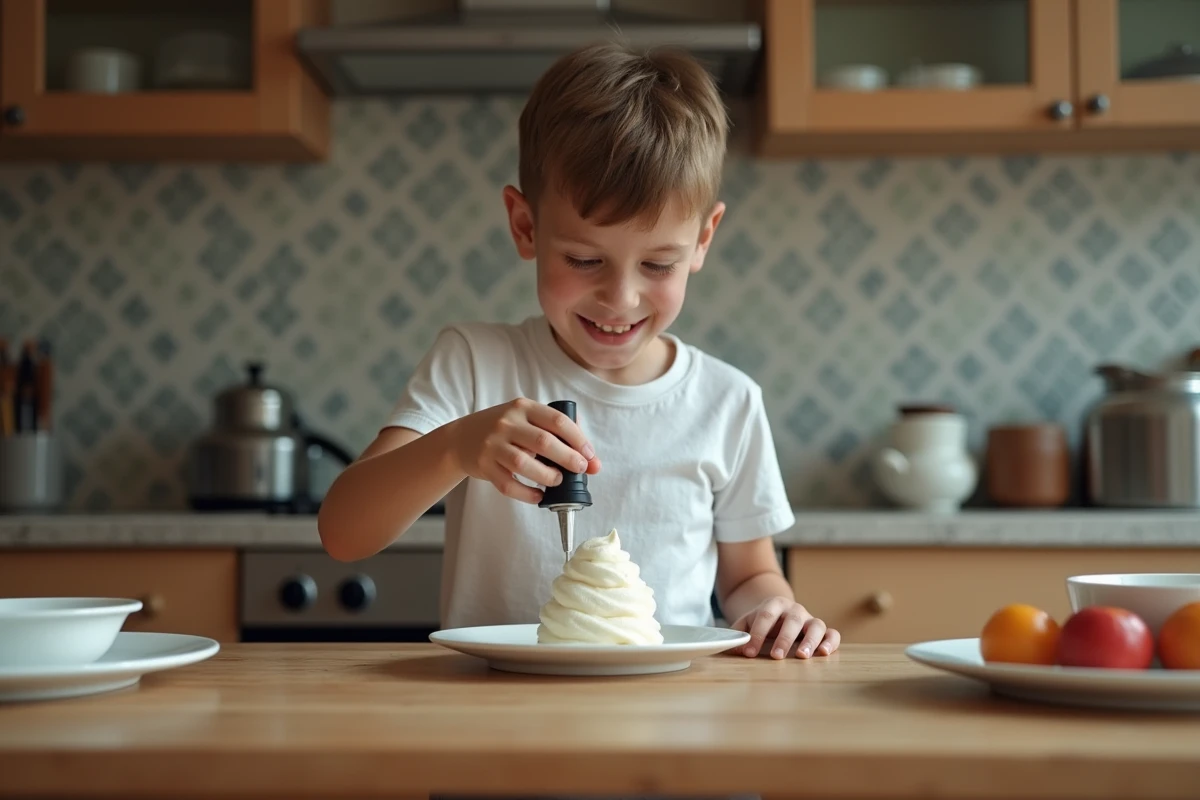
Achieving a creamy whipped cream every time: practical tips and mistakes to avoid
Obtaining a dense and firm whipped cream with a siphon relies as much on the precision of the ingredients as on the automatic gestures. Focus on a well-chilled whole liquid cream, as rich in fat as possible: this is the basis for a full and creamy texture. Be careful, if the tank is too full, the entire distribution is hindered.
The assembly requires careful action. The gas cartridge must be screwed on firmly, and then a few seconds should be given for the pressure to settle properly in the whipped cream siphon. A vigorous shake, with the siphon head down, perfectly harmonizes the gas with the preparation. This single step can change everything in the final texture.
To avoid disappointments, keep these principles in mind:
- After each use, disassemble and rinse all parts of the siphon: the slightest residue can sabotage the next preparation.
- Plan for a cold stay for both the device and the liquid cream: two hours in the refrigerator is ideal just before serving.
- Do not overload with sugar or flavors: excesses weigh down the preparation and make the foam difficult to extract.
Every detail counts to achieve a light, stable, and homogeneous foam. When everything aligns, the siphon releases its cloud of whipped cream until the last pressure, without losing anything in the tank. This can turn a cooking gesture into a small daily achievement.